I was organizing a school storage area recently when I found them — three brand-new label makers, still in the box. Never opened. Purchased at three different points in time by three different people who couldn't find the last one.
That's not a budget problem. That's a visibility problem. And it's one of the most expensive invisible issues a school can have.
Here's what's really driving up your supply costs — and how to stop the leak for good.
If You Can't See It, You'll Buy It Again
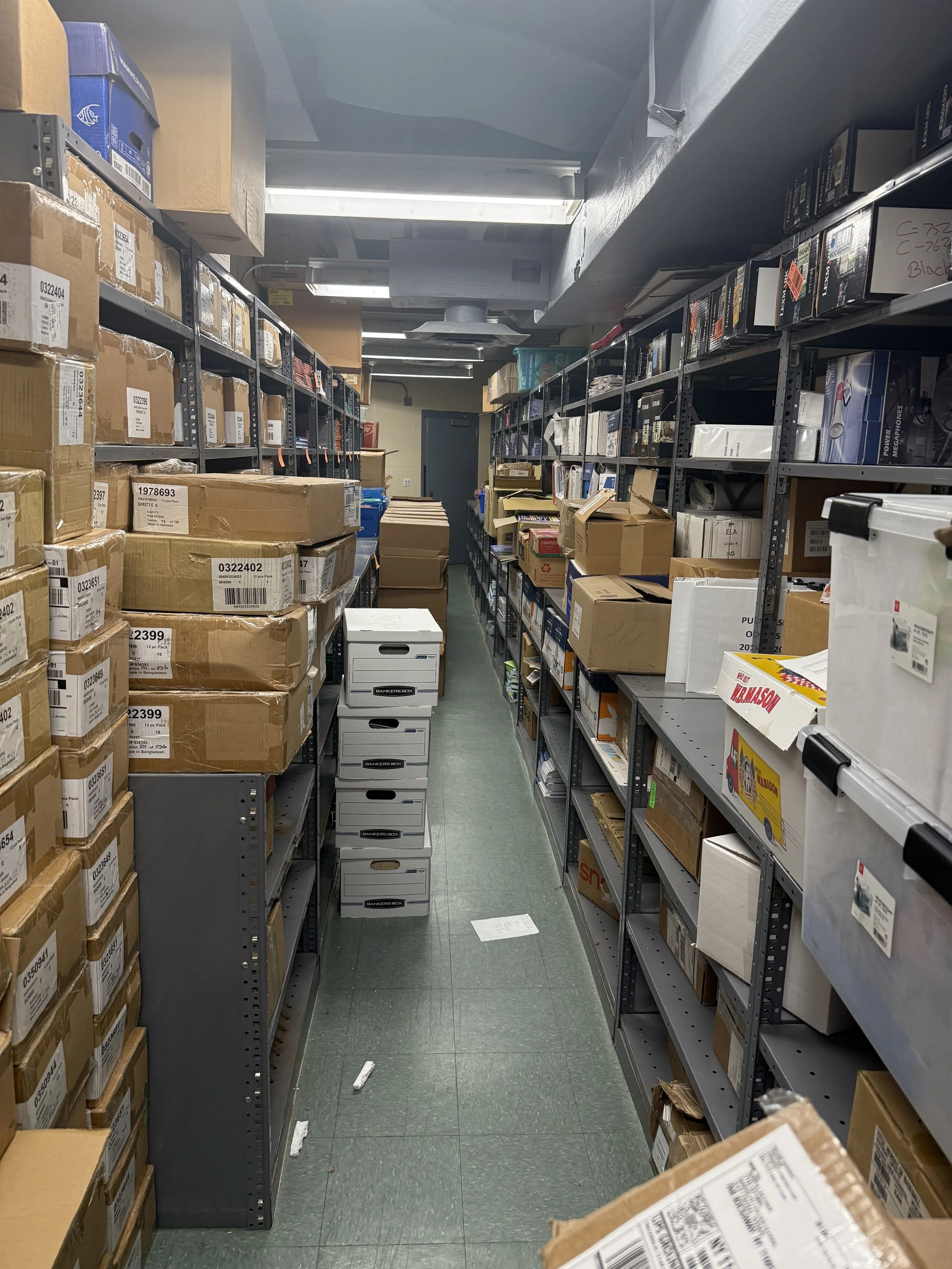
When supplies are buried in disorganized storage rooms, crammed into unlabeled bins, or scattered across multiple locations, staff do what any reasonable person would do: they assume you're out and order more.
This is the #1 source of unnecessary supply spending in schools. Not waste. Not theft. Not budget mismanagement. Just a storage system that makes it impossible to know what you already have.
In almost every school I've worked in, we've uncovered duplicate — sometimes triplicate — quantities of the same items. Copy paper. Printer ink. Construction paper. Folders. Staplers. The list goes on.
The Supply Closet No One Wants to Deal With Is Costing You Every Month
Every school has that room. The one where stuff goes in and rarely comes out organized. The one where finding a single ream of paper turns into a 10-minute excavation project.
The problem isn't that people don't care. It's that a disorganized storage space trains people to stop looking and just order new. It's faster, less frustrating, and feels like the path of least resistance.
But that path of least resistance is paved with your school's supply budget.
The Fix Is Simpler Than You Think — But You Have to Actually Do It
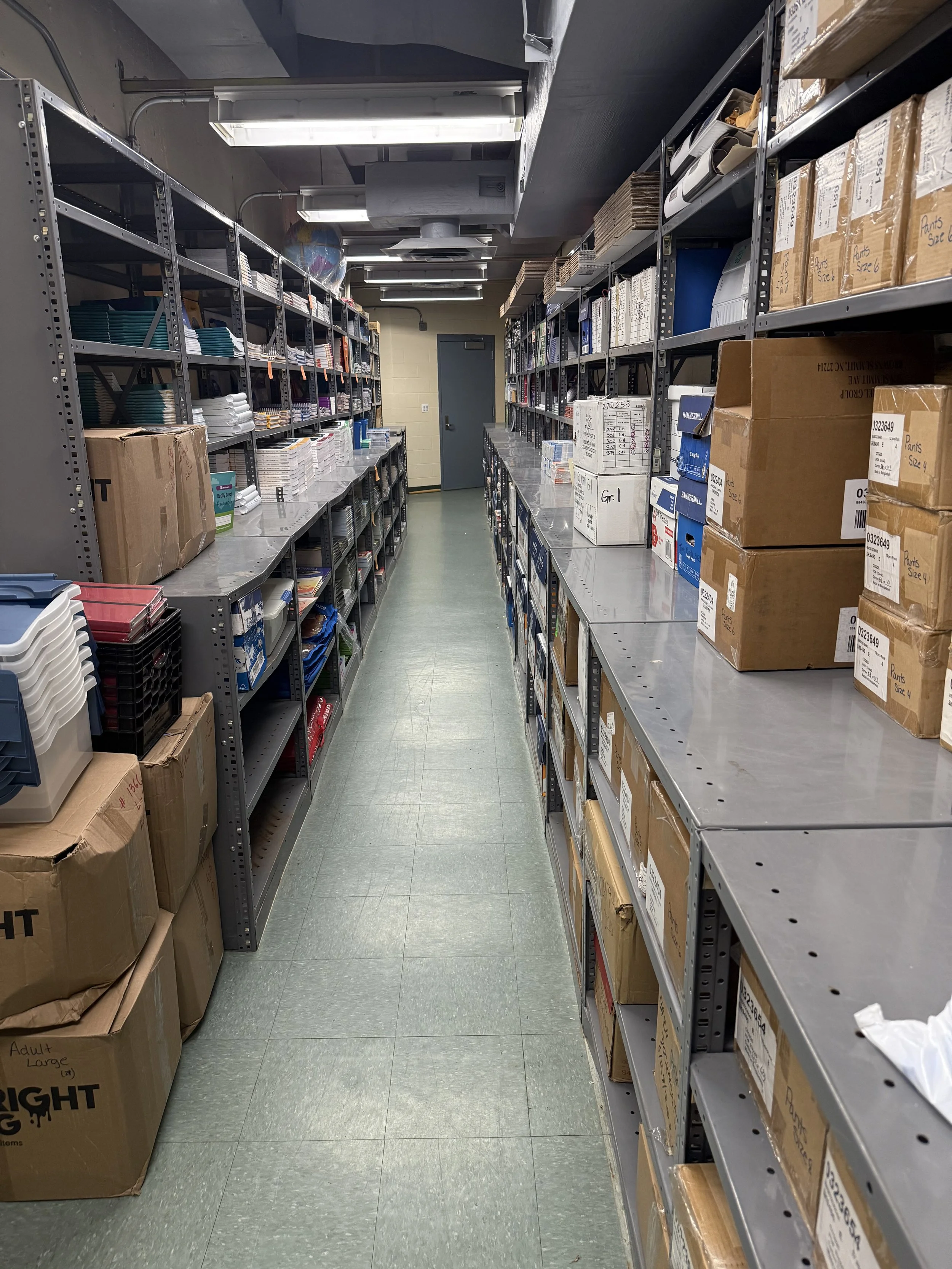
An organized supply system isn't about aesthetics. It's about inventory control. When every item has a designated home, a clear label, and a spot that's visible to everyone who needs access — staff stop over-ordering because they can actually see what's there.
The basics of a system that works:
One location per category — no more "I think it might be in the main office or maybe the back closet"
Clear, large labels that anyone — including substitutes and new staff — can read at a glance
A "low stock" signal system so reordering is triggered by actual need, not by assumption
A quick inventory walkthrough before each ordering cycle — 15 minutes that can save hundreds of dollars
What Happens After You Get Organized (The Part No One Talks About)
The financial savings are real — but the shift in staff behavior is what surprises most school administrators the most.
When people can find what they need quickly, they stop workarounds. They stop stockpiling supplies at their own desks "just in case." They stop submitting supply requests for things the school already has. The whole culture around supplies changes because the friction is gone.
Organization isn't a one-time project. It's a system that pays for itself — every single month.
Sound Familiar? Here's Your Next Step.
If your school is constantly running out of supplies you swear you just ordered, or placing orders without really knowing what's already in stock — your storage system is the problem, not your budget.
Peace of Find works with NYC-area schools to build organizing systems that stick. We're an NYC DOE Certified Vendor, so the process is simple for schools to work with us.
Book a free consultation at www.peaceoffindny.com or reach out directly at jazmyn@peaceoffindny.com. Let's stop the leak.
